SIKKIM: Sikkim veterinarian is weaving tradition, innovation and sustainability into woollen fabric, creating apparel inspired by the region’s cultural richness and timeless fashion. Collaborating with weavers, livestock farmers, and self-help groups (SHGs), Dr Chewang Norbu Bhutia (38) provides skill training, creates local employment opportunities, and ensures fair wages, fostering self-reliance among locals.
By integrating traditional handloom techniques with contemporary designs, his ‘Crafted Fibers’, a brand under Fibersgenisx Private Limited, aims to preserve the essence of age-old craftsmanship while making it relevant to modern lifestyles.
Registered in July last year, Crafted Fibers deals in apparel – handwoven stoles, shawls, caps, socks, gloves etc. Around 30-40% of the fabric used is locally produced fur from angora rabbits and sheep. Blending different fibres using traditional techniques, the brand tries to come up with new designs that capture both the traditional and the modern. The dyes used, too, are natural and environment-friendly.
Bhutia, who holds a bachelor’s degree in veterinary sciences and a post-graduate degree in veterinary medicine, uses successfully reviving the handicraft tradition of Sikkim. With a career dedicated to uplifting rural communities, he has successfully implemented several projects, providing vocational training and organising skill-building workshops and demonstrations aimed at empowering farmer producer organisations and SHGs.
His expertise in the field of zoology has not only driven innovation in sustainable practices but also contributed significantly to enhancing livelihood of rural artisans.
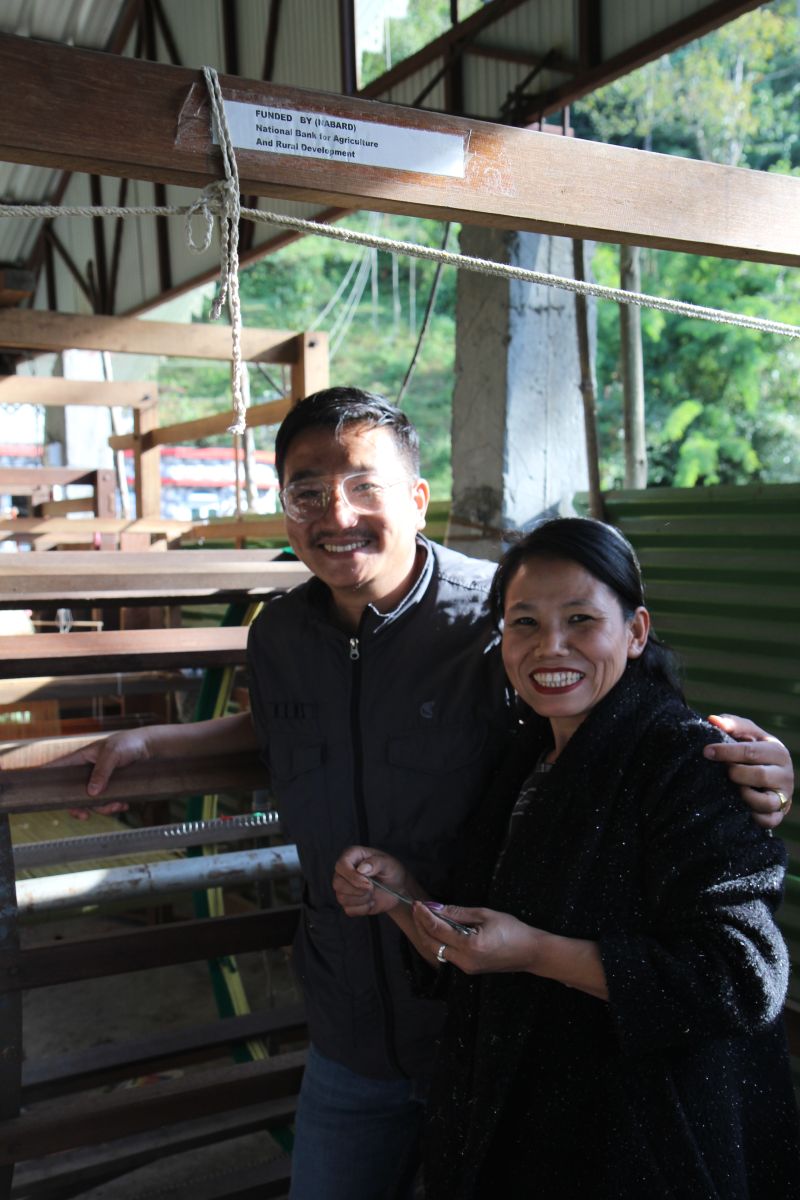
A self-taught weaver-designer, Bhutia works with weavers and artisans of north and south Sikkim. Sometime back, he helped set up a cooperative society for them in collaboration with NABARD which allocated some funds for the project.
“There was a time when weaving was common in north Sikkim. Then, it ceased completely. We are trying to revive old looms. They were lying unused in households. It is heartening that the same old weavers are returning to looms,” Bhutia tells us.
He had introduced handwoven items made of fur of local angora rabbits to the Namthang village in south Sikkim. And, with sheep rearing common in the state, procuring fur was never a concern.
Bhutia spends out of his pocket to train weavers, mostly women. There are 15-20 weavers who always work with him and earn Rs 15,000-30,000 a month. He makes sure they are paid whether or not products get sold.